
The Hidden Risks of Untreated Myopia:
Why Early Intervention Matters
Myopia, or nearsightedness, is becoming increasingly common worldwide, but Myopia is more than just a need for glasses or contact lenses. Untreated or progressive myopia can lead to serious eye diseases and complications. Understanding these risks highlights why early intervention and proper management are crucial for long-term eye health.

What Happens When Myopia Progresses?
Myopia occurs when the eyeball grows too long, causing light to focus in front of the retina rather than directly on it. As myopia worsens, this elongation increases the strain on various parts of the eye, making it more vulnerable to severe conditions. Watch the YouTube video below as Dr. Jesse explains how our eyeball is like pizza dough.
Diseases and Complications Linked to Myopia
- Retinal Detachment
- As the eye stretches, the retina (the light-sensitive layer at the back of the eye) becomes thinner and more fragile, increasing the risk of retinal tears or detachment. Retinal detachment is a medical emergency that can lead to permanent vision loss if not treated promptly.
- Myopic Macular Degeneration (MMD)
- In high myopia, the central part of the retina (the macula) may develop degenerative changes due to chronic stretching. This condition can cause irreversible loss of detailed central vision, severely affecting daily activities like reading or recognizing faces.
- Glaucoma
- People with myopia are more likely to develop glaucoma, a condition where increased pressure in the eye damages the optic nerve. If untreated, glaucoma leads to peripheral vision loss and can progress to total blindness.
- Cataracts
- Myopic individuals tend to develop cataracts earlier in life. Cataracts cloud the eye’s lens, reducing vision clarity and often requiring surgical intervention.
- Retinoschisis and Posterior Staphyloma
- Severe myopia can lead to retinoschisis (splitting of the retina layers) and posterior staphyloma (abnormal outpouching of the eye wall), both of which threaten vision stability.

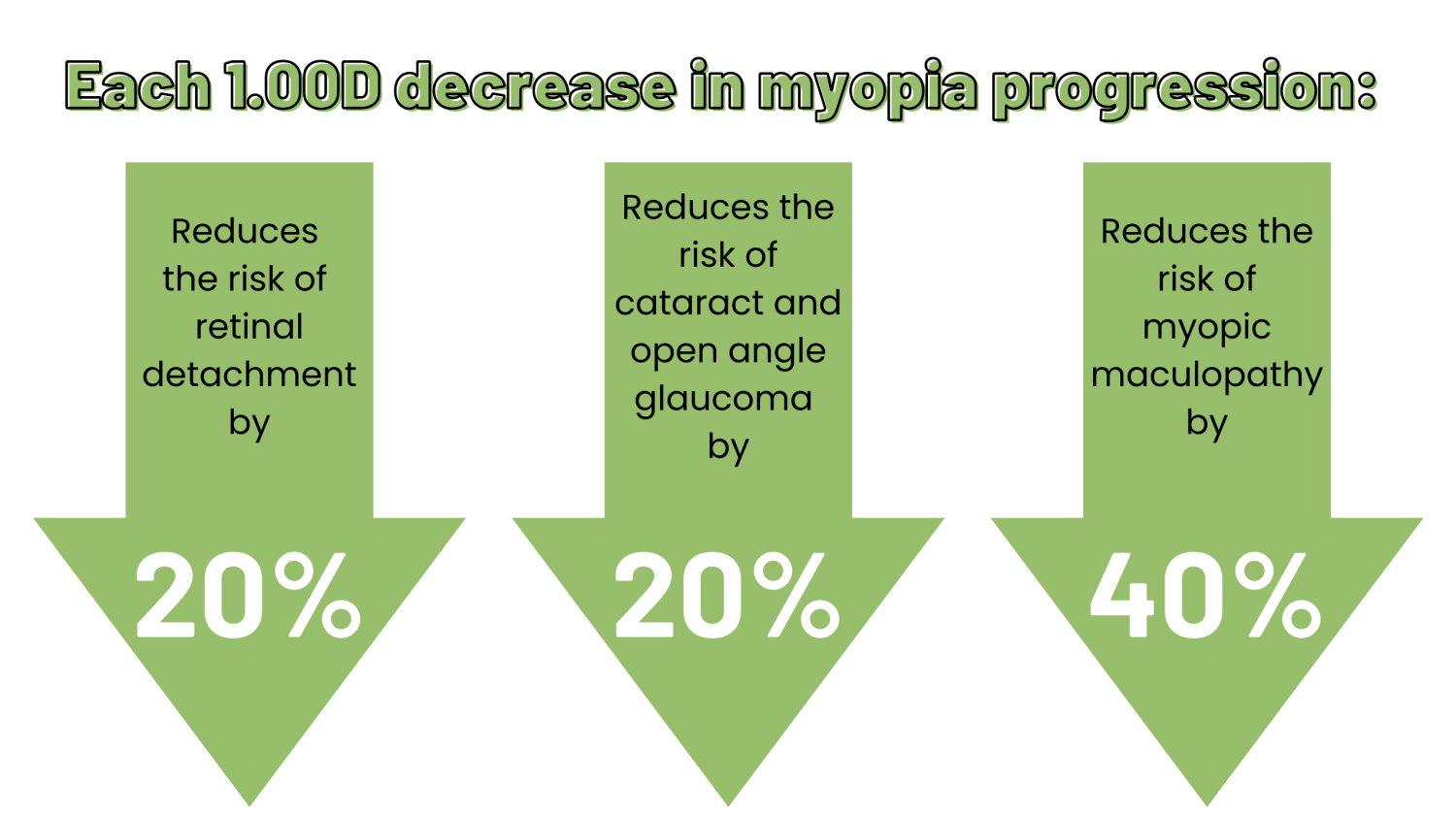
The Long-Term Impact of Untreated Myopia
While glasses or contact lenses can correct blurry vision, they don’t address the underlying elongation of the eye. Without proper management, high myopia increases the risk of these complications exponentially. Studies estimate that by 2050, nearly half of the world’s population will be myopic, with a significant portion at risk for these vision-threatening conditions.
Why is this happening more? Children are becoming myopic at younger and younger ages due to increased screen time and less time spent outdoors. Myopia can progress quickly in children because they’re in a stage of rapid growth for their whole bodies! That’s why it’s important for them to be evaluated for risk as soon as possible.


Protecting Vision with Early Intervention
Thankfully, modern optometry offers effective ways to slow myopia progression and reduce the risk of complications:
- Atropine Eye Drops: Low-dose atropine can significantly slow eye elongation in children.
- Orthokeratology (Ortho-K): Special overnight contact lenses that reshape the cornea and may help control myopia progression.
- Multifocal Glasses or Contacts: Designed to reduce strain and manage myopia.
- Lifestyle Changes: Encouraging outdoor play and limiting prolonged near work (like screen time) can reduce risks in children.
Why Myopia Management Matters
The goal of myopia management isn’t just to improve current vision—it’s to protect eye health for a lifetime. By addressing myopia early, you can help your child or yourself avoid the life-altering complications of advanced eye diseases.
At Brighter Outlook Vision, we’re passionate about preventing myopia from becoming a lifelong challenge. Our comprehensive myopia management program combines cutting-edge treatments with personalized care to ensure your family enjoys clear, healthy vision now and in the future.
Don’t wait until it’s too late. Call us to discuss myopia management options and learn how we can help safeguard your vision or your child’s vision for years to come. Together, we’ll build a brighter future.


